Sky Italia Without Satellite The Real Truth About Online Viewing

Estimated reading time: 10 to 12 minutes.
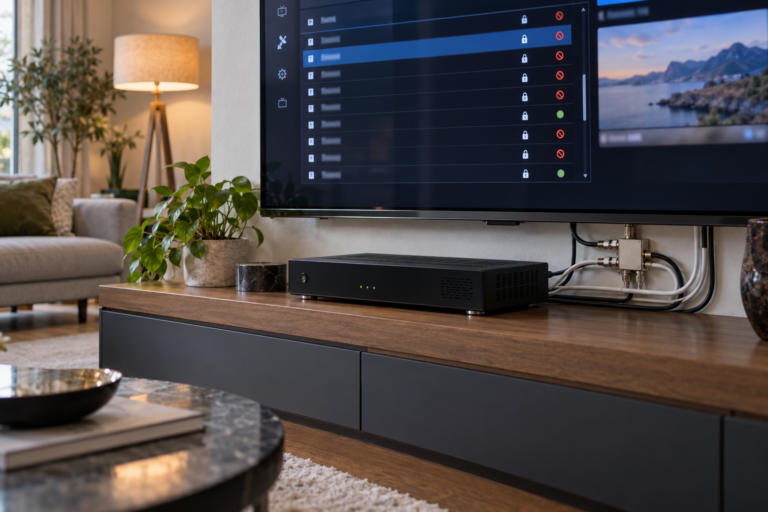
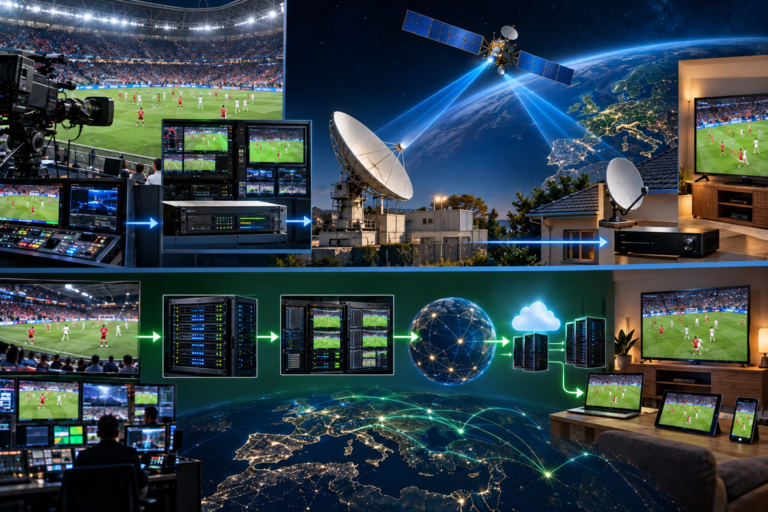
For many years, Sky Italia was closely linked to satellite dishes, LNB alignment, and traditional signal reception. But today, a growing number of users watch the same content without any dish at all. This shift creates confusion. People expect the same reliability and behavior, but internet-based viewing works under completely different technical rules.
Watching Sky Italia without satellite does not mean the system became simpler. In fact, it introduces more variables. Instead of relying on a fixed signal path from satellite to dish, the system now depends on network stability, server delivery, buffering logic, and device performance. Understanding this difference is the key to explaining why online viewing can feel smooth one moment and unstable the next.
Quick Context. Sky Italia without satellite uses internet streaming instead of RF signal reception. Content is delivered in small data segments from servers, buffered on your device, and adjusted dynamically based on network conditions and hardware capability.
Table of Contents
What it really means to watch without a dish
How Sky Italia delivers content online
Key differences between satellite and internet viewing
How buffering works in streaming
How devices affect the experience
What it really means to watch without a dish
When Sky Italia is used without a satellite dish, the entire delivery method changes. Instead of receiving a continuous broadcast signal, your device requests content through the internet. There is no physical signal to lock onto, no LNB to convert frequencies, and no dish alignment involved.
What replaces that system is a request-based model. Your device asks for video data from servers, receives it in small segments, stores it temporarily, and plays it back. This means the viewing experience depends on how smoothly those requests and responses happen over time.
This change is fundamental. In satellite systems, once the signal is stable, the channel remains stable. In streaming systems, stability must be maintained continuously. Every second of playback depends on the next data segment arriving on time.
How Sky Italia delivers content online
Sky Italia prepares its channels for internet delivery by encoding them into multiple quality levels. Each level is divided into small segments. These segments are stored across server infrastructure designed to serve many users at once.
When you open a channel, your device does not download a full stream at once. It requests a list of segment locations, then begins downloading them sequentially. These segments are placed into a playback buffer. The buffer allows the video to continue playing even if there are short delays in data delivery.
The system continuously monitors network performance. If the connection slows down, the app may switch to lower quality segments to avoid interruption. If the connection improves, it may switch back to higher quality. This constant adjustment is part of what makes streaming flexible, but it also introduces variability.
Key differences between satellite and internet viewing
The most important difference is consistency. Satellite systems deliver a continuous signal once locked. Internet streaming delivers data in pieces that must arrive in sequence and on time. This makes streaming more sensitive to timing and network behavior.
Another difference is control. In satellite reception, the user controls hardware like dish alignment and LNB position. In streaming, much of the delivery path is outside the user’s control. The user can only manage local factors such as network setup and device performance.
Latency is also different. Satellite broadcasts reach all viewers at nearly the same time. Internet streams can be delayed due to buffering and delivery timing. This is why live events may appear slightly later on streaming compared to traditional broadcast.
The role of your home network
Your home network becomes the most critical part of the system when using Sky Italia without satellite. The connection must not only be fast but also stable. Streaming depends on consistent data flow, not just high peak speeds.
WiFi introduces additional variables. Distance from the router, walls, interference, and congestion can all affect performance. A connection that works fine for browsing may still struggle with continuous video delivery.
Ethernet connections are generally more stable because they remove wireless variability. This is why switching from WiFi to Ethernet often improves streaming performance without changing the internet plan.
Network congestion also plays a role. When multiple devices use the same connection, bandwidth is shared. This can reduce the amount of data available for streaming at any given moment.
How buffering works in streaming
Buffering is often misunderstood. It is not just a delay. It is a protective mechanism. The buffer stores a short amount of video data ahead of playback. This allows the video to continue playing smoothly even if there are small interruptions in delivery.
If the network slows down too much, the buffer empties. When that happens, playback pauses until enough data is received again. This is what users see as buffering.
The size and behavior of the buffer depend on the app and device. Some systems use aggressive buffering to prevent interruptions, while others prioritize lower delay. This balance affects how the stream behaves under unstable conditions.
How devices affect the experience
The device you use plays a major role in streaming performance. It must decode video, manage memory, and maintain synchronization. If the device is underpowered or outdated, it may struggle even if the network is stable.
Smart TVs vary widely in performance. Some models handle streaming smoothly, while others show lag or instability over time. External streaming devices may provide more consistent performance because they are optimized for this task.
App optimization also matters. A well-designed app can handle network fluctuations more effectively. Poor optimization can lead to errors even under good conditions.
Real limitations of online viewing
Watching Sky Italia without satellite offers flexibility, but it also introduces limitations. The system depends on external factors such as internet stability and server load. These factors can change throughout the day.
Peak usage periods can affect performance. During major events, more users access the same content, increasing demand on the delivery system. Even well-designed platforms can show stress under heavy load.
Another limitation is dependency on the local environment. WiFi quality, device capability, and network setup all influence the experience. This means two users with the same service may have very different results.
Understanding these limitations helps set realistic expectations. Streaming can provide high quality viewing, but it requires stable conditions across multiple layers.
| System Component | Satellite Viewing | Internet Streaming | Common Issue |
|---|---|---|---|
| Signal Source | Satellite broadcast | Server-based delivery | Server delay or load |
| Transmission Path | RF signal through dish | Internet network | Network instability |
| Reception Method | Dish and LNB | App and device | App or device limitation |
| Stability Factor | Signal strength and alignment | Bandwidth consistency | Fluctuating connection |
| Failure Behavior | Signal loss or pixelation | Buffering or freezing | Timing or delivery issues |
Reality Check
Switching to internet viewing does not remove technical challenges. It changes them. Instead of dealing with dish alignment and signal strength, users must now manage network stability, device performance, and streaming behavior. The experience depends on how well these elements work together, not on a single factor.
Final Verdict
Sky Italia without satellite is built on a completely different system from traditional broadcasting. It relies on adaptive streaming, real-time data delivery, and device-side processing. This makes it flexible but also sensitive to network and hardware conditions. Understanding how the system works helps explain why problems occur and how to address them effectively. In online viewing, consistency across the entire chain is more important than any single component.
FAQ
| Question | Answer |
|---|---|
| Can Sky Italia work without a satellite dish | Yes. It can stream content over the internet using apps and compatible devices. |
| Is streaming as stable as satellite | It can be stable, but it depends on network consistency and device performance rather than signal strength. |
| Why does buffering happen in streaming | Buffering occurs when data delivery slows and the playback buffer runs out of stored video. |
| Does WiFi affect streaming quality | Yes. Weak or congested WiFi can cause interruptions even if overall speed is high. |
| What is the best way to improve stability | Use a stable network connection, reduce interference, and ensure the device and app are updated and capable. |