Why Switching Away From Astra 19.2°E Is Rare in Europe
Estimated reading time. 9 to 11 minutes.
In theory, switching satellite positions should be simple. Signals move, equipment adjusts, and television continues as usual. In practice, it rarely works that way. Across Europe, broadcasters and platforms tend to stay with Astra 19.2°E even when alternative satellite positions are available. This reluctance is not driven by habit alone. It is rooted in practical realities that make switching far more complex than it appears.
Satellite distribution sits at the center of many broadcasting workflows. Changing that center affects everything connected to it. For most European operators, Astra 19.2°E is not just a satellite position. It is the foundation on which years of planning, investment, and operational knowledge have been built.
- The common myth about switching satellite positions
- The hidden complexity behind a switch
- Infrastructure dependencies built over time
- Operational risk and service continuity
- The installed base problem
- Ecosystem lock and industry alignment
- The real cost of moving away
- Why alternatives rarely justify the move
- Reality Check
- Final Verdict
- FAQ
The common myth about switching satellite positions
To an outside observer, switching satellite positions may seem like a technical adjustment. Repoint a dish, update a receiver, and continue broadcasting. This perception overlooks how deeply satellite positioning is embedded in modern television systems.
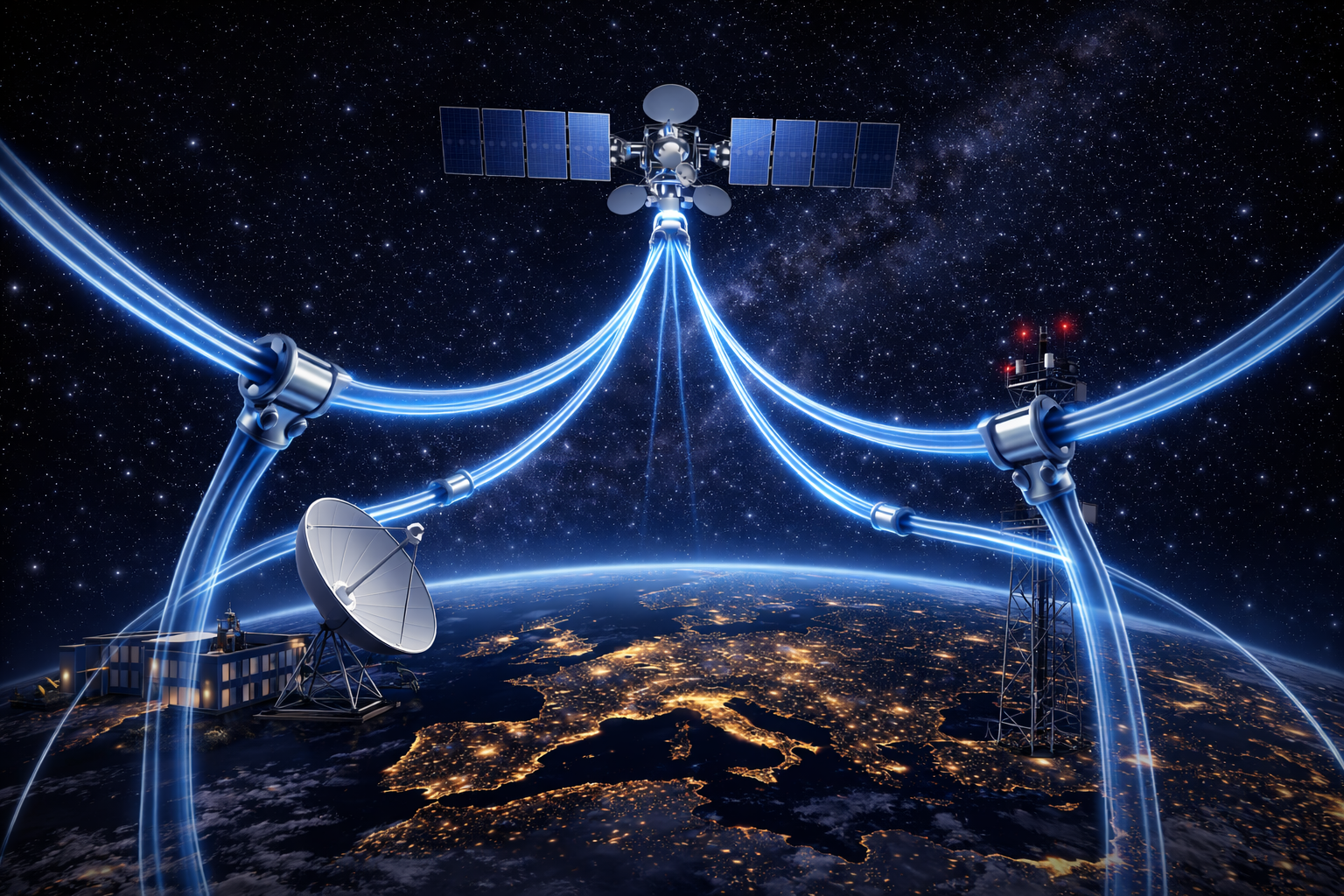
Satellite distribution is not a single component. It connects playout systems, encoding chains, monitoring tools, contractual agreements, and customer equipment. A change at the orbital level ripples through all of these layers.
This is why most broadcasters treat switching as a last resort rather than a routine option.
The hidden complexity behind a switch
Behind every satellite feed is a carefully balanced configuration. Bitrates, modulation parameters, service identifiers, and redundancy paths are tuned for long term stability.
Moving to a different satellite position often means revisiting each of these parameters. Even small changes can introduce instability if not managed carefully.
This complexity increases with scale. The larger the network, the more interconnected the systems become.
Infrastructure dependencies built over time
Broadcasters invest heavily in infrastructure aligned to specific satellite positions. Uplink facilities, backup systems, and monitoring setups are designed with Astra 19.2°E in mind.
These investments are not easily transferable. Reconfiguring infrastructure requires time, testing, and coordination across teams.
For many organizations, the existing setup works well enough that change offers little practical benefit.
Operational risk and service continuity
Television distribution prioritizes continuity. Any disruption, even brief, is immediately visible to viewers.
Switching satellite positions introduces risk. Unexpected behavior, misalignment, or equipment incompatibility can interrupt service.
Because Astra 19.2°E has proven stable over time, staying with it often feels safer than experimenting with alternatives.
The installed base problem
Millions of households across Europe have equipment aligned to Astra 19.2°E. That installed base represents a significant barrier to change.
Moving away would require customer-facing adjustments. Dishes would need realignment. Support teams would need retraining. Documentation would need updates.
These changes create friction that broadcasters prefer to avoid unless absolutely necessary.
Ecosystem lock and industry alignment
Over time, an ecosystem forms around a dominant satellite position. Manufacturers, installers, and service providers align their products and services accordingly.
This alignment creates efficiency but also lock-in. Alternative positions may offer similar capabilities, but they lack the same level of integrated support.
Breaking away from this ecosystem requires coordinated effort across the entire industry.
The real cost of moving away
Costs associated with switching are often underestimated. They include not only equipment changes but also labor, testing, customer communication, and potential service disruptions.
These indirect costs can outweigh any perceived savings from alternative satellite options.
As a result, decision makers tend to favor continuity.
Why alternatives rarely justify the move
For a switch to make sense, an alternative must offer clear and sustained advantages. Marginal improvements are not enough.
In most cases, Astra 19.2°E already meets operational needs. Alternatives may be viable, but they do not provide a compelling reason to disrupt established systems.
This balance keeps Astra 19.2°E firmly in place.
Reality Check
Switching satellite positions can happen in specific scenarios, such as regional targeting or new market entry.
However, for large scale European distribution, change remains rare and carefully controlled.
Final Verdict
Switching away from Astra 19.2°E is rare in Europe because the costs, risks, and complexity outweigh potential benefits.
Years of infrastructure investment and ecosystem alignment have made Astra 19.2°E the practical default for European broadcasters.
FAQ
Is switching satellite positions technically possible?
Yes. It is possible, but rarely practical at scale.
Do new broadcasters always choose Astra 19.2°E?
Many do, because it simplifies access to the existing ecosystem.
Are alternatives technically inferior?
Not necessarily. The difference lies in adoption and operational familiarity.
Can switching reduce costs?
In some cases, but indirect costs often offset potential savings.
Will switching become more common in the future?
Change is possible, but large scale transitions remain unlikely without major market shifts.