Why Netflix Uses More Data Than You Expect
Estimated reading time: 18 to 24 minutes.
Many people are surprised when they check their internet usage and discover that Netflix consumed far more data than expected. A few movies or several evenings of streaming can suddenly use hundreds of gigabytes without obvious warning.
This happens because modern streaming systems are extremely data intensive. Resolution, bitrate, HDR processing, adaptive streaming behavior, compression complexity, and playback stability all affect how much bandwidth Netflix consumes. Streaming today is far more demanding than many users realize.
Quick Context. Netflix uses large amounts of data because modern streaming relies on continuous high bitrate video delivery, adaptive quality systems, and increasingly complex visual formats like 4K HDR.
Table of Contents
Why streaming consumes so much data
Bitrate is the hidden data engine
How resolution changes bandwidth usage
Why 4K streaming increases data dramatically
HDR streaming and higher data demand
Compression versus visual quality
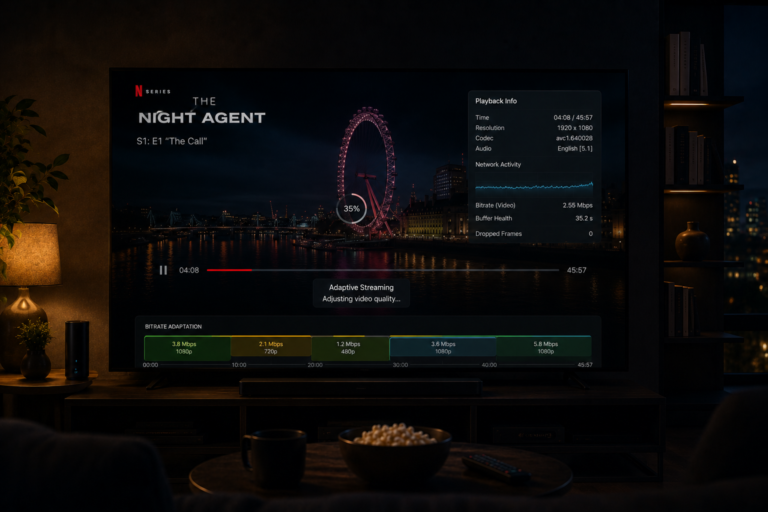
Adaptive bitrate streaming explained
Why action scenes consume more bandwidth
Complex dark scenes and data usage
Stable internet can increase Netflix data use
Why Ethernet sometimes increases bandwidth usage
How devices affect streaming quality selection
Background streaming behavior users ignore
Why Netflix may consume more data at night
Why streaming consumes so much data
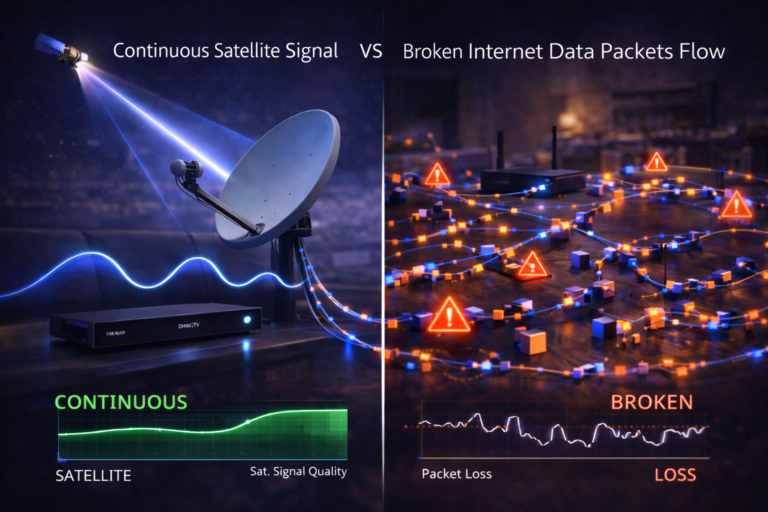
Streaming is fundamentally different from traditional television broadcasting.
With broadcast TV, the signal is transmitted once to everyone simultaneously.
Streaming is individualized.
Every Netflix viewer receives a separate personalized stream in real time.
Your device continuously requests:
- Video segments
- Audio streams
- Subtitles
- Metadata
- Quality adjustments
This constant flow of information consumes large amounts of bandwidth over time.
Modern video quality standards make this even more demanding.
Bitrate is the hidden data engine
Most users focus only on resolution.
But bitrate is the real factor controlling data consumption.
Bitrate determines how much visual information Netflix sends every second.
Higher bitrate means:
- Better image quality
- More detail
- Cleaner motion
- Less compression artifacting
But higher bitrate also means:
- More bandwidth usage
- More data consumption
- Higher network demand
Netflix continuously balances quality against bandwidth usage.
How resolution changes bandwidth usage
Higher resolution dramatically increases data requirements.
Each jump in resolution multiplies the amount of visual information that must be delivered.
For example:
- 720p requires far less data than 1080p
- 1080p requires far less data than 4K
But resolution alone does not tell the whole story.
A highly compressed 4K stream may still look worse than a cleaner lower resolution stream.
Netflix dynamically adjusts these variables constantly.
Why 4K streaming increases data dramatically
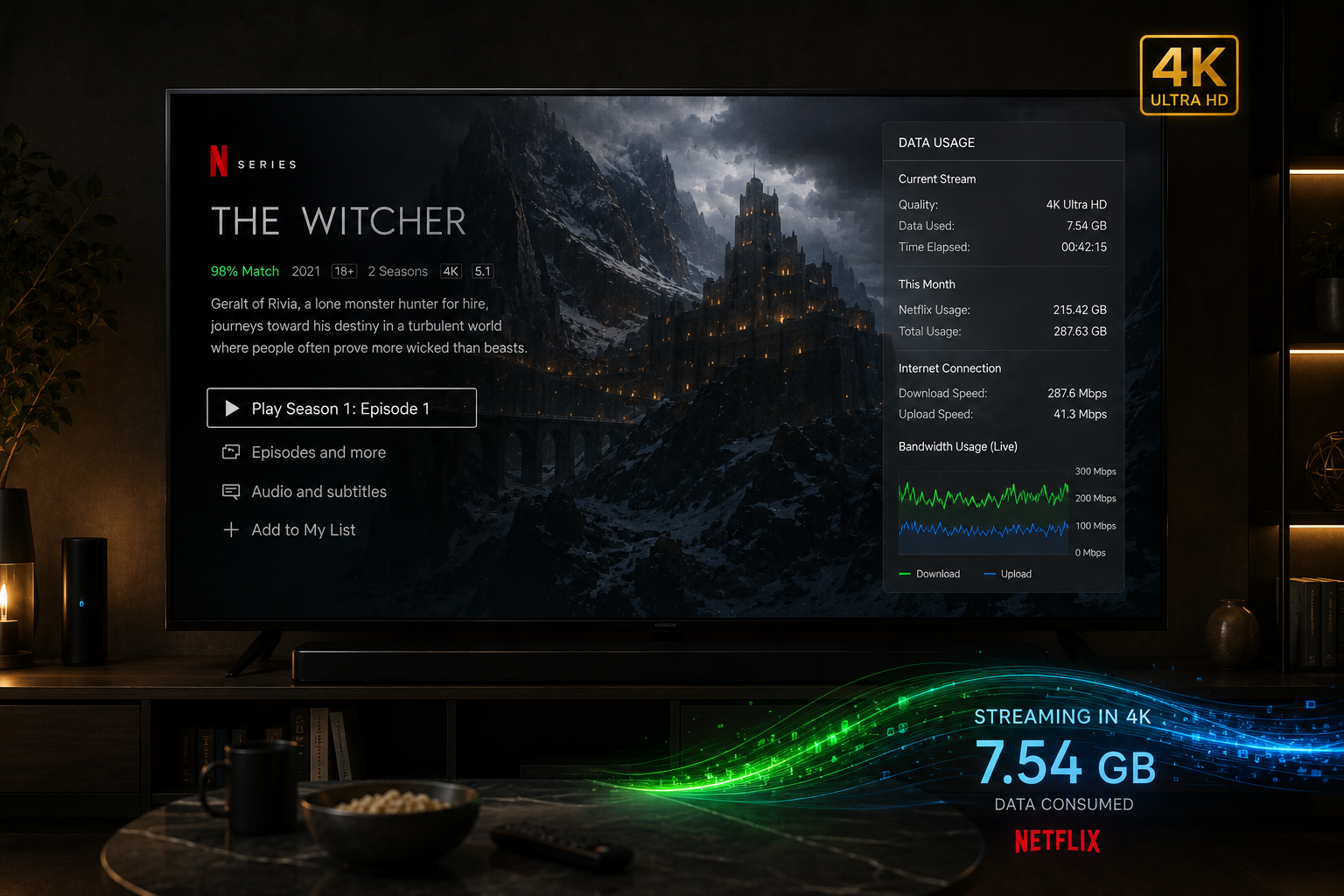
4K streaming contains four times more pixels than standard 1080p video.
This massively increases bitrate demand.
To maintain clean 4K quality, Netflix must deliver:
- More detail
- More texture information
- More motion precision
- More color depth
All of this consumes bandwidth rapidly.
Long 4K viewing sessions can easily consume enormous amounts of data without users realizing it.
HDR streaming and higher data demand
HDR adds another layer of complexity.
HDR video contains:
- Expanded brightness information
- Greater color precision
- Wider dynamic range
This increases processing and delivery requirements.
HDR streaming often requires higher bitrate to preserve visual quality correctly.
Without enough bitrate, HDR content can look unstable or heavily compressed.
Netflix therefore increases bandwidth usage to maintain HDR quality.
Compression versus visual quality
Netflix compresses video heavily to reduce bandwidth usage.
Without compression, streaming modern 4K HDR video would be unrealistic for most internet connections.
Compression removes image information considered less important.
But preserving acceptable quality still requires substantial bitrate.
As visual complexity increases:
- Compression becomes harder
- More data is needed
- Bandwidth demand rises
This is especially true during fast action scenes.
Adaptive bitrate streaming explained
Netflix uses adaptive bitrate streaming.
This means quality changes dynamically depending on:
- Network stability
- Buffer health
- Bandwidth consistency
- Playback conditions
When the connection is strong and stable, Netflix may increase bitrate automatically.
This improves image quality but also increases data usage.
Many users do not realize stable internet can actually increase total Netflix bandwidth consumption.
Why action scenes consume more bandwidth
Fast motion scenes are extremely demanding for streaming systems.
Action sequences contain:
- Rapid movement
- Explosions
- Smoke
- Particle effects
- Fast camera changes
All of these require more data to preserve detail.
The encoder cannot easily reuse previous frame information during heavy motion.
This increases bitrate demand dramatically.
Action movies often consume more bandwidth than slower dramatic content.
Complex dark scenes and data usage
Dark scenes are surprisingly difficult for streaming systems.
Shadows contain subtle gradients and fine texture information.
Preserving these details requires:
- Careful compression
- Higher bitrate
- Stable delivery
Netflix sometimes increases bitrate during visually difficult scenes to avoid visible artifacts.
This also contributes to higher data usage.
Stable internet can increase Netflix data use
This surprises many users.
Stable internet often causes Netflix to use more data.
Why?
Because the adaptive streaming system detects favorable conditions and increases quality.
Higher stable bitrate means:
- Sharper image
- Cleaner motion
- Better HDR
- Less visible compression
But it also means higher bandwidth consumption.
Poor internet sometimes accidentally reduces data usage simply because Netflix lowers quality aggressively.
Why Ethernet sometimes increases bandwidth usage
Ethernet connections provide highly stable delivery conditions.
This allows Netflix to maintain:
- Higher bitrate
- Longer high quality playback periods
- More stable 4K streaming
Ironically, improving connection quality may increase total data usage.
The stream simply remains at higher quality more consistently.
How devices affect streaming quality selection
Netflix detects device capability automatically.
Modern TVs and streaming boxes may trigger:
- Higher resolution playback
- HDR streams
- Advanced codecs
- Higher bitrate delivery
Older devices may receive lower quality streams automatically.
This means the same Netflix account may consume very different amounts of data on different devices.
Background streaming behavior users ignore
Many users underestimate how continuously Netflix streams data.
Even while browsing menus, Netflix often:
- Loads previews
- Buffers content
- Synchronizes recommendations
- Prepares playback segments
Auto play previews also consume bandwidth constantly.
These small background activities accumulate over time.
Why Netflix may consume more data at night
Nighttime viewing behavior often increases total bandwidth usage.
People tend to:
- Watch longer sessions
- Use larger TVs
- Enable higher quality playback
- Watch more 4K content
Additionally, some users experience better network stability after midnight.
Netflix responds by increasing bitrate.
The image improves, but bandwidth usage rises as well.
A real world streaming example
Imagine someone watching Netflix on a modern 4K OLED TV over Ethernet.
The network is highly stable.
Netflix automatically increases:
- Resolution
- Bitrate
- HDR precision
The user watches several action movies containing:
- Heavy motion
- Dark scenes
- Complex visual effects
Each scene requires massive amounts of compressed data.
Over several evenings, Netflix consumes hundreds of gigabytes.
The user is shocked by the bandwidth usage.
But technically the system was simply delivering the highest quality it could sustain.
| Factor | Technical Effect | Bandwidth Impact |
|---|---|---|
| Higher bitrate | More image detail | Higher data use |
| 4K resolution | More pixels | Massive bandwidth increase |
| HDR streaming | Expanded visual data | Higher bitrate demand |
| Action scenes | Rapid frame changes | More data complexity |
| Stable Ethernet | Consistent high quality | Longer high bitrate playback |
| Adaptive streaming | Dynamic quality increases | Variable bandwidth usage |
| Large TVs | Higher quality targeting | Increased data demand |
Reality Check
Netflix uses large amounts of data because modern streaming quality standards are extremely demanding. 4K HDR video, adaptive bitrate systems, and complex visual scenes require continuous high bandwidth delivery to maintain stable playback quality.
Final Verdict
Netflix consumes more data than many users expect because streaming today involves far more than simple video playback. High bitrate delivery, 4K HDR formats, adaptive streaming logic, complex compression systems, and demanding motion scenes all increase bandwidth usage significantly. Stable internet connections often increase data consumption even further because Netflix automatically raises quality levels whenever conditions allow it. Modern streaming quality comes at the cost of continuous heavy data usage.
FAQ
| Question | Answer |
|---|---|
| Why does Netflix use so much data | Because high quality streaming requires continuous high bitrate delivery |
| Does 4K increase Netflix bandwidth usage | Yes dramatically because 4K contains far more visual information |
| Can stable internet increase Netflix data usage | Yes because Netflix raises quality when conditions improve |
| Do action scenes consume more bandwidth | Yes because fast motion requires more data to preserve detail |
| Why does Ethernet sometimes use more data | Because stable delivery allows higher consistent bitrate streaming |