German Channels Transponder Distribution Astra 19.2
Estimated reading time: 13 minutes.
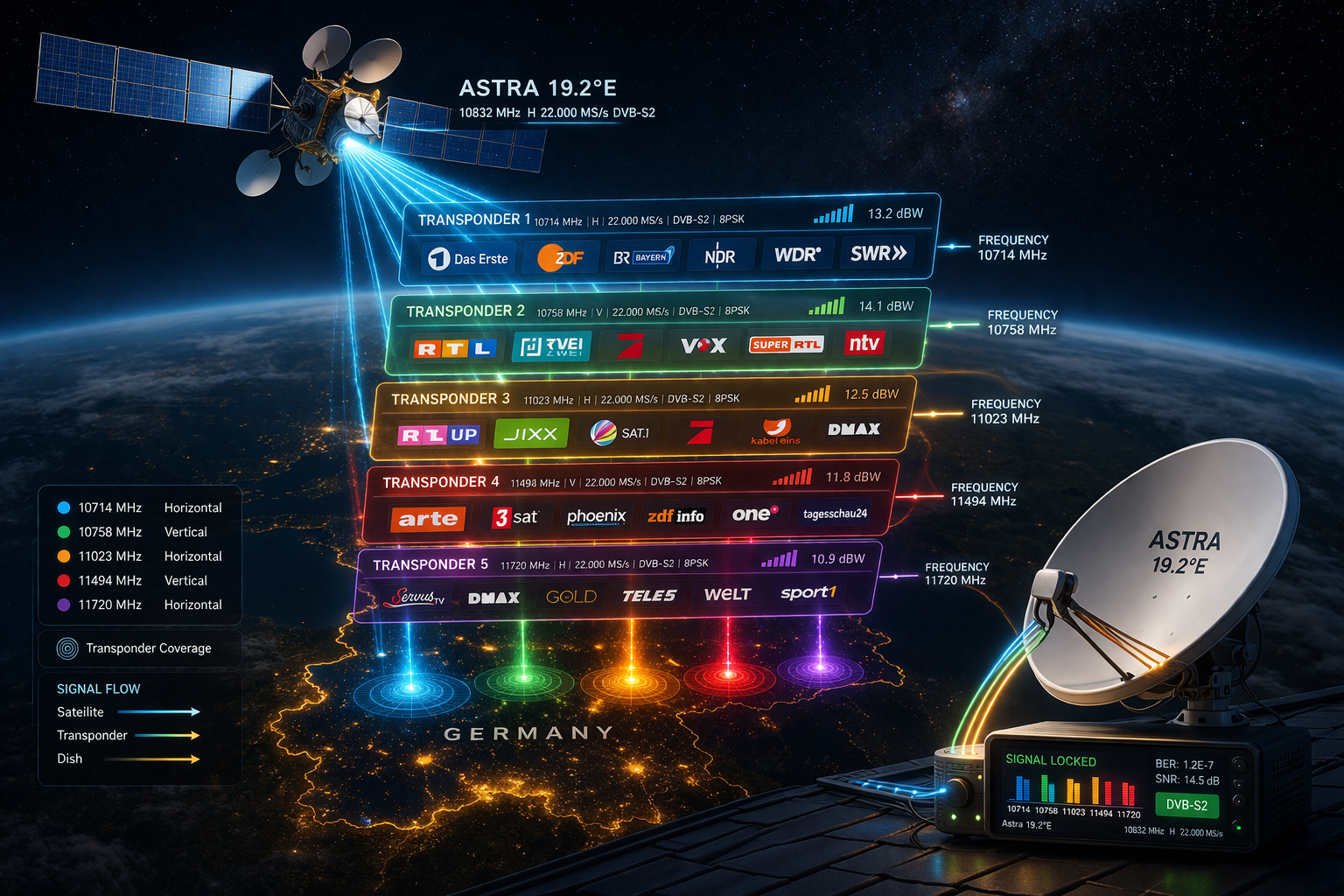
German TV channels on Astra 19.2 are not randomly placed across the satellite. Each channel is assigned to a specific transponder based on technical planning, bandwidth limits, and signal efficiency. This distribution directly affects how channels behave during weak signal conditions, weather changes, and receiver tuning.
If you notice that certain German channels always fail together, or only specific groups become unstable, the reason is usually linked to how those channels are distributed across transponders. Understanding this distribution is one of the most powerful ways to diagnose real satellite reception problems.
German channels on Astra 19.2 are distributed across multiple transponders. Each transponder uses its own frequency, polarization, and modulation settings. Reception problems often affect entire transponders, not individual channels.
- What transponder distribution means in satellite systems
- How German channels are assigned to transponders
- Role of frequency and polarization in distribution
- How receivers lock to distributed channels
- Signal behavior differences between transponders
- Why some transponders perform better than others
- Common problems caused by transponder distribution
- Analytical distribution diagnosis table
- Practical steps to fix transponder related issues
- FAQ
What transponder distribution means in satellite systems
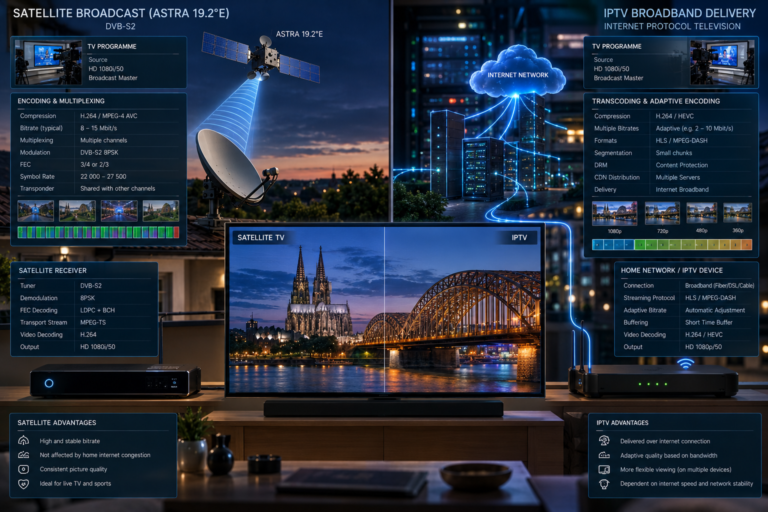
Transponder distribution refers to how channels are spread across different transmission units on the satellite. Each transponder acts as a separate carrier that can handle multiple channels within its bandwidth.
Instead of placing all German channels on one signal path, Astra 19.2 distributes them across many transponders. This improves efficiency, reduces congestion, and allows better signal management across different regions.
For the viewer, this means that not all channels depend on the same signal conditions. Each group of channels follows the behavior of its assigned transponder.
How German channels are assigned to transponders
Channel assignment is based on several technical factors. These include available bandwidth, compression efficiency, broadcaster agreements, and transmission priorities. HD channels usually require more bandwidth than SD channels, so they are placed accordingly.
German public broadcasters and private networks are distributed across different transponders. This prevents overload on a single frequency and ensures stable delivery under varying conditions.
This assignment also affects troubleshooting. If a set of channels belongs to one transponder, they will behave as a single group in terms of signal quality and stability.
Role of frequency and polarization in distribution
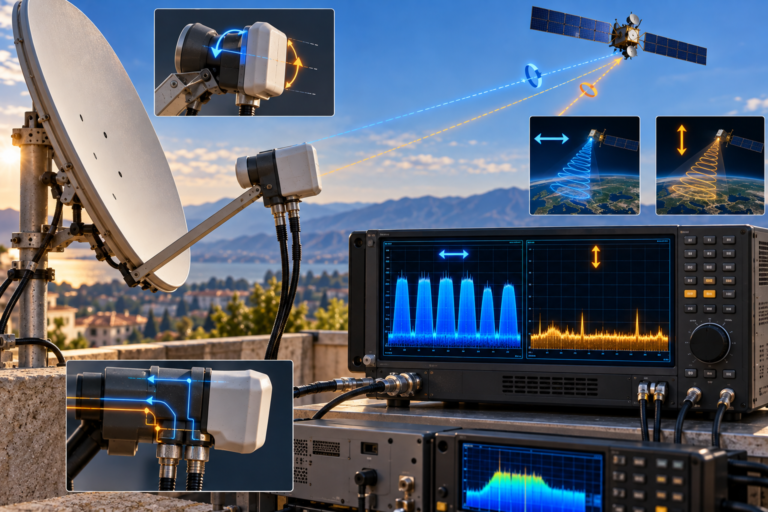
Each transponder uses a specific frequency and polarization. Astra 19.2 uses both horizontal and vertical polarization to reuse frequency space efficiently.
The LNB selects these parameters based on signals from the receiver. If the switching between polarization or frequency bands fails, entire transponder groups may disappear.
This is why distribution is tightly linked to hardware behavior. A problem in polarization switching does not affect random channels. It affects all channels assigned to that specific signal path.
How receivers lock to distributed channels
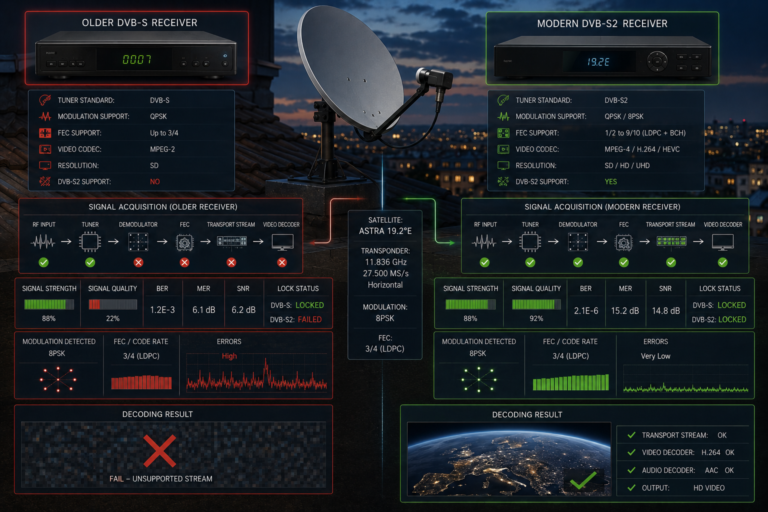
The receiver locks onto one transponder at a time. It tunes to the correct frequency, applies the correct polarization, and attempts to decode the signal.
Once locked, it reads the transport stream and extracts all available channels within that transponder. This is why scanning is done per transponder, not per channel.
If the receiver fails to lock a specific transponder, all channels within that distribution group become unavailable.
Signal behavior differences between transponders
Not all transponders behave the same. Some have stronger signals, better coverage, or more robust transmission parameters. Others may be more sensitive to alignment errors or weather conditions.
This creates noticeable differences in performance. One group of German channels may remain stable during rain, while another group may disappear completely.
These differences are not random. They are the result of how each transponder is configured and how your installation interacts with those signals.
Why some transponders perform better than others
Several factors affect transponder performance. Dish alignment is one of the most important. A perfectly aligned dish can receive all transponders with similar strength, while a slightly misaligned dish may favor some over others.
LNB quality also plays a role. A high quality LNB maintains stable frequency conversion and low noise levels. A weak LNB may introduce variations that affect certain transponders more than others.
Cable quality, connectors, and environmental conditions also contribute to uneven performance. Even small losses can push weaker transponders below the decoding threshold.
Common problems caused by transponder distribution
One of the most common problems is partial channel loss. This happens when one transponder cannot be received properly while others still work.
Another issue is incorrect scanning. If the receiver uses outdated transponder data, it may fail to find channels even though the signal is present.
Interference and noise can also affect specific frequencies more than others. This creates situations where only certain German channel groups are unstable.
Analytical distribution diagnosis table
| Symptom | Cause | Meaning | Action |
|---|---|---|---|
| Group of channels missing | Transponder lock failure | Distribution issue | Check frequency and alignment |
| Only vertical channels missing | Polarization switching issue | LNB problem | Check voltage and LNB |
| Signal drops during rain | Weak transponder margin | Low tolerance | Improve alignment |
| Channels not found after scan | Incorrect data | Receiver issue | Update parameters |
| Some channels pixelate | Low quality signal | Decoding issue | Adjust dish and cables |
Practical steps to fix transponder related issues
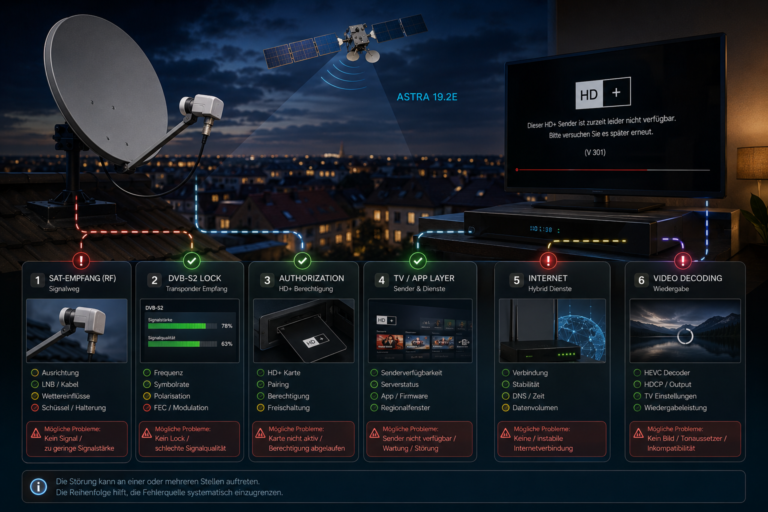
Start by identifying which channels are affected. Check their frequency and polarization. If they match, the issue is likely related to that specific transponder.
Next, compare signal quality across different transponders. Look for differences that indicate uneven reception.
Inspect your installation. Check cables, connectors, and LNB condition. Replace any damaged components.
Fine tune dish alignment carefully. Small adjustments can improve weaker transponders without affecting stronger ones.
Finally, update receiver settings and perform a manual scan using correct parameters.
Most partial channel problems are caused by transponder distribution, not total signal loss. Understanding how channels are distributed helps avoid unnecessary fixes and leads to faster diagnosis.
German channel distribution on Astra 19.2 is the foundation of how satellite TV works. Each transponder carries a group of channels that behave together under signal conditions. By understanding this structure, you can troubleshoot more effectively and maintain stable reception.
FAQ
| Question | Answer |
|---|---|
| Why do multiple channels disappear together | Because they are on the same transponder and share the same signal path. |
| Does signal strength guarantee all channels | No. Signal quality is more important for decoding channels. |
| Can transponder distribution change | Yes. Broadcasters may update channel placement over time. |
| Why do some channels work better than others | Because different transponders have different signal conditions and margins. |
| Should I always rescan channels | No. First verify signal quality and correct parameters before scanning. |