Astra LNB Setup Guide 2026

Estimated reading time: 18 minutes.
In satellite installations receiving German television from Astra 19.2, the LNB plays a critical role in capturing the signal reflected by the dish. While many viewers focus on dish alignment, the configuration and positioning of the LNB can have an equally strong impact on signal stability.
Incorrect LNB setup often leads to weak signal levels, missing channels, or unstable reception across certain transponders. Understanding how the LNB works and how to configure it properly helps households maintain reliable satellite television reception.
Quick Context
This guide explains how Astra LNB setup works including positioning skew adjustment frequency configuration and installation factors that affect satellite signal quality.
- What the LNB does in a satellite system
- Correct LNB positioning on the dish
- LNB skew and polarization alignment
- Types of LNB used for Astra reception
- LNB frequency settings in receivers
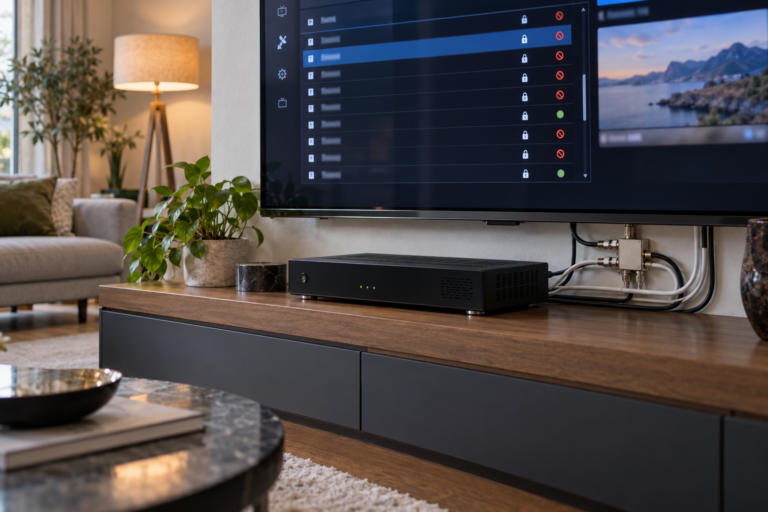
- Cable connection between LNB and receiver
- Common LNB configuration parameters
- Reality Check
- Final Verdict
- Frequently Asked Questions
What the LNB does in a satellite system
The Low Noise Block converter, commonly called the LNB, is the component mounted at the front of the satellite dish. Its main function is to receive the focused signal reflected from the dish surface.
Satellite signals transmitted from Astra travel at extremely high frequencies. These frequencies cannot travel efficiently through standard coaxial cables used in home installations.
The LNB solves this problem by converting the high frequency satellite signal into a lower intermediate frequency. This converted signal can then travel through the cable to the satellite receiver inside the home.
Without the LNB conversion process the receiver would not be able to interpret the satellite broadcast.
Correct LNB positioning on the dish
The LNB must be placed exactly at the focal point of the dish reflector. This focal point is where the reflected satellite signals converge after bouncing off the dish surface.
Most dish designs include a support arm that positions the LNB at the correct distance from the dish.
If the LNB sits too far forward or too far backward from the focal point the signal strength reaching the receiver may decrease significantly.
Proper positioning ensures the LNB captures the maximum signal energy collected by the dish.
LNB skew and polarization alignment
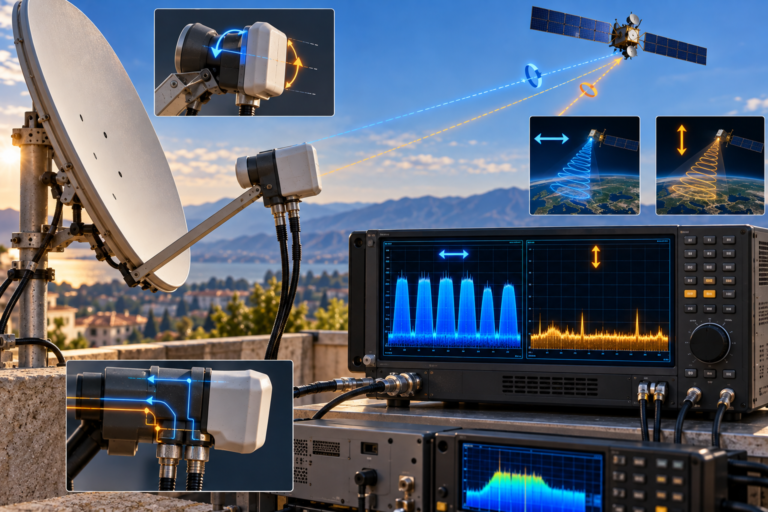
Satellite signals are transmitted using horizontal and vertical polarization. The LNB must rotate slightly to align with the polarization orientation used by the satellite.
This rotation is known as skew adjustment.
When skew is set correctly the LNB can separate horizontal and vertical signals without interference.
If skew is incorrect the receiver may experience weak signals or difficulty decoding certain transponders.
Adjusting skew involves rotating the LNB a few degrees clockwise or counterclockwise depending on geographic location.
Types of LNB used for Astra reception
Different types of LNB are available depending on the installation requirements. The most common type is the universal LNB used in standard satellite installations.
Universal LNB models support both low band and high band frequency ranges used by Astra satellites.
Other types include twin LNB, quad LNB and quattro LNB designs.
These models allow multiple receivers or multi room installations to access the satellite signal simultaneously.
LNB frequency settings in receivers
Satellite receivers must be configured with the correct LNB frequency values. These values tell the receiver how to interpret the converted signal coming from the LNB.
For universal LNBs the typical local oscillator frequencies are nine point seven five gigahertz for the low band and ten point six gigahertz for the high band.
Incorrect receiver settings may cause the receiver to search the wrong frequency range during channel scanning.
Ensuring the receiver uses the correct LNB parameters helps detect all available Astra channels.
Cable connection between LNB and receiver
The coaxial cable linking the LNB to the receiver carries both the signal and power supply required by the LNB.
Satellite receivers send voltage signals through the cable to control LNB polarization switching.
A voltage of thirteen volts selects vertical polarization while eighteen volts selects horizontal polarization.
If the cable connection is damaged the LNB may not receive correct control signals which can affect channel reception.
Proper cable installation and shielding protect the signal from external interference.
Common LNB configuration parameters
| Parameter | Purpose | Effect on reception |
|---|---|---|
| LNB position | Focal point alignment | Maximum signal capture |
| Skew rotation | Polarization matching | Improves signal quality |
| Local oscillator frequency | Signal conversion | Correct channel detection |
| Cable connection | Signal transmission | Maintains signal stability |
Reality Check
Many reception problems blamed on the satellite or receiver are actually caused by incorrect LNB positioning or configuration. Proper setup ensures reliable Astra signal reception.
Final Verdict
Final Verdict
The LNB is one of the most important components in a satellite system. Correct positioning skew adjustment and receiver configuration ensure strong signal reception and stable access to Astra 19.2 television broadcasts.
Frequently Asked Questions
| Question | Answer |
|---|---|
| What happens if the LNB is misaligned | A misaligned LNB may reduce signal strength and cause some channels to disappear. |
| Do all satellite dishes use the same LNB type | Most installations use universal LNB models but multi receiver systems may require different types. |
| Can LNB skew affect reception | Yes incorrect skew may cause weak signal on specific transponders. |
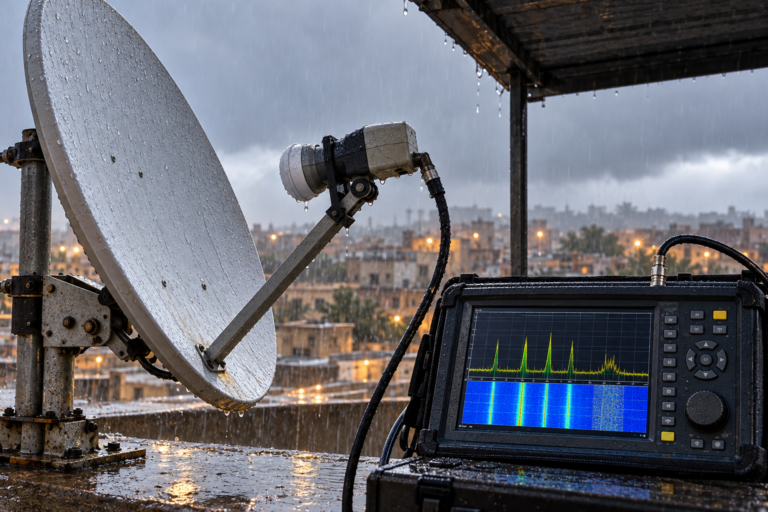
| How long does an LNB usually last | Most LNB units function reliably for many years unless exposed to extreme weather conditions. |